

The Hidden History of Britain three-part course
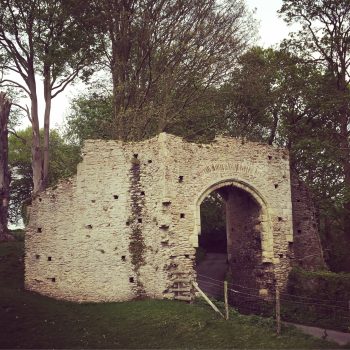
Experience the towns, cities, coasts and islands that have slipped through the fingers of time, and understand how pivotal moments in history transformed Britain’s landscape, with bestselling author Dr Matthew Green on this groundbreaking new three-part evening course.
- Attend either in person, in Hampstead, or online via Zoom
- This course is an adaptation of Matthew Green’s Times Top Ten Bestselling book, Shadowlands: A Journey through Lost Britain, critically acclaimed by The Sunday Times, Guardian, Daily Mail, Spectator, Times Literary Supplement, Herald, Country Life, Mail on Sunday and more.

From an Orkney village engulfed in sand 5,000 years ago to a medieval city swept off a cliff and swallowed by the North Sea, from a lost city dug up by moles in the Forest of Dean to secret Nazi villages in Norfolk, and villages drowned in reservoirs, join Dr Matthew Green in person or online as, with the aid of cinematic projections, vivid anecdotes, startling evocations, and wine, he resurrects Britain’s forgotten history and presents an awful premonition of the future.
Based on four years of original research for the top ten bestselling, critically acclaimed Shadowlands, this is a unique and unforgettable take on Britain’s history, an expanded version of the author’s Guardian Masterclass that proved such a huge hit.
It is for anyone interested in Britain’s history; for those who wants to better understand how modern Britain came to be; for those who wish to gain a fresh perspective upon the key turning points in Britain’s history — the coming of agriculture, Black Death, Reformation, Enlightenment, industrialisation, climate change and more; and for those attracted to the haunting and romantic beauty of ruins.
- Watch a haunting 15-minute video, ‘the City that Came Back from the Dead’, on the rise and fall of Old and New Winchelsea, presented by the author Dr Matthew Green.
COURSE DATES
SESSION 1: Wednesday 1st June, 6.30-8.30pm
SESSION 2: Wednesday 8th June, 6.30-8.30pm
SESSION 3: Wednesday 15th June, 6.30-8.30pm
COURSE LOCATION
In the author’s drawing room, at 25a Rona Road, NW3 2HY
COURSE STRUCTURE
PART ONE, c. 3,000 BC — 1550 AD
INTRODUCTION
This is a new history of Britain through places that no longer exist. It aims to present a truer sense of the progress of time and a harrowing vision of the future. We will introduce ‘mediums of oblivion’, my travels around Britain, and the idea of lost places as conductors for the major themes in Britain’s history.
SKARA BRAE, Orkney
The dramatic story of how the great storm of 1850 uncovered a Neolithic settlement that looks like a crazy golf course buried beneath a sand dune in Orkney, an exquisitely preserved example of one of the earliest agricultural settlements in Europe, which flourished 3200 to c. 2500 BC. An early manifestation of the transition from the inhabitants of these isles being nomadic hunter-gatherers to settled farmers, establishing the foundations for civilisation.
SEGUE
After settlements like Skara Brae were established, towns and cities were built by the invading Romans — a brief look at Silchester (abandoned 6th-century AD), now a swaddling-cloth of absence — the ghost city of Londinium (abandoned late 5th century AD), and the defensive burghs built by the Anglo-Saxon king Alfred in the 9th century AD. But it was in the Middle Ages, after the Norman Conquest, that economically diverse towns and cities appeared. Most are still with us. But some failed:
TRELLECH, Welsh Marches
The extraordinary story of how a lost medieval boom town was unearthed by moles in 2008 and an archaeology student’s hunch. Built around 1200, archival and archaeological evidence proves this was a giant munition factory where iron was forged to make weapons for Norman warlords as part of England’s efforts to crush and colonise Wales in the 13th century, led by Edward I. Exploration of the Welsh Marches a the ‘Wild West’ of Britain and the disappearance of Trellech after the slaughter of its patrons and attacks by the native Welsh.
OLD and NEW WINCHELSEA, East Sussex
Whereas Trellech specialised in iron production, others rose to prosperity through other commodities. For the late Saxon port of Old Winchelsea, it was wine from Gascony. The story of how this wine metropolis was destroyed by ferocious mid-13th century storms associated with medieval climate change, rebuilt to a radical chequerboard layout from 1288, on a hill further inland as New Winchelsea, flourished, only to fall to ruin with the retreat of the sea, leaving the mournful spectacle of urban landmarks stranded in fields. Otherwise would be a major city today.
PART TWO: 1348 — 1930
WHARRAM PERCY, Yorkshire Wolds.
Something that contributed to New Winchelsea’s demise was the Black Death, a pandemic from Cathay that would have a hugely destructive impact upon Britain’s map and landscape. A Boschian hellscape of the horrors of the Black Death, zooming in upon the medieval ghost village of Wharram Percy in Yorkshire, and the psychological trauma of its inhabitants. Explanation of how it — and 3,000 villages like it — were wiped off the map by the indirect economic legacy of the Black Death in the form of mass evictions and sheep enclosures which reached their pinnacle in Tudor times.
SEGUE
At the time of the Tudor enclosures, Britain was receiving its first fresh ‘layer’ of ruins in many centuries with the ransacking and burning of the monasteries during the Reformation. After wild oscillations under her relatives, Protestantism was secured and entrenched under Elizabeth I, in whose reign a visionary bookseller sent a celebrated topographer on a fact-finding mission to sift myth from reality in the case of a mammoth, highly idiosyncratic ruin: that of the sinking city of Dunwich.
DUNWICH, Suffolk
John Stow reported that in 1579, Dunwich, once East Anglia’s principal city, was half-sunk. Once one of the major cities of medieval England, it was rocked by two cataclysmic storms in 1288 and 1328 exacerbated — even brought on — by medieval climate change, precipitating a process of coastal erosion that swept much of the rest of it off the cliff in the succeeding centuries until, by 1900, only a windswept priory and the church tower of All Saints’ Church, perched perilously on the cliff-edge, remained. Striking picture-postcards of this cliff-top wreck help us understand why the sunken city became a source of such fascination to 19th-century Romantic artists and writers for whom its ruins took on — and still take on — a philosophical and existential resonance. In 1922, finally, it fell.
ST KILDA, Outer Hebrides
Postcards were a manifestation of Britain’s industrialisation and increased affordability of travel, and they capture the vanishing of a very different type of community: the bird-grabbing people who had lived on the sea-mountain of St Kilda for thousands of years, first extensively written about in 1699. The story of what each successive age ‘saw’ in St Kilda: the philosophical voyagers of the Enlightenment in search of ‘natural man’ untainted by civilisation; Victorian visitors on cruise ships wanted thrills and to ‘civilise’ the natives — the flow of visitors irrevocably changing the St Kildan way of life, making them less self-sufficient, and aware of a world beyond their shores until, in 1930, it was abandoned for good. Now a vision of a post-apocalyptic future, stripped down and bare, and reminiscent of the primitve, self-sustained way of life to which we may one day have to return.
Part Three: 1939 — 2022, and beyond…
STANTA — The Stanford Training Area, the Norfolk/Suffolk Brecklands
Abandoned St Kilda now in military hands, and the story of how the demands of international war hollowed out some 20% of Britain’s landmass, including a cluster of villages in the Norfolk/Suffolk Brecklands which were drained of inhabitants, zombified, used for war games, and had alien new identities thrust upon them: some became ‘Nazi’ villages; others Soviet and one a vivid simulacrum of an Afghan village right down to synthetic aromas and blood pumps for amputee actors playing suicide bomber victims. The stories of those inhabitants such as Lucilla Reeve who would rather die than leave.
CAPEL CELYN, North Wales
The theme of sacrifice for the greater good leads us to our final vanished place: one of the few solely Welsh-speaking villages drowned under billions of tons of water so Liverpool could have a new reservoir — without the consent of anyone living there (they read about the scheme in newspapers). The tragic, moving, extensively photographed story of the heroic resistance campaign and the wider context of England trampling over Welsh nationhood, stretching back to medieval times, and part of the same process we saw with Trellech. The ghostliness of the site today and how it fuelled demands — eventually met — for Wales to achieve a degree of political independence.
THE PRESENT and the FUTURE
A look at some towns and villages that are sinking into the sea today: Fairbourne in Wales and Skipsea in Yorkshire, and forecasts showing how many of our major coastal or riverine cities could be substantially underwater by the end of the century if dramatic progress is not made in containing the ravages of climate change. End with the sense of precariousness of our own settlements today; the idea that the map of tomorrow could look very different from the map of today, and that, by 2090, much of London could be underwater.


